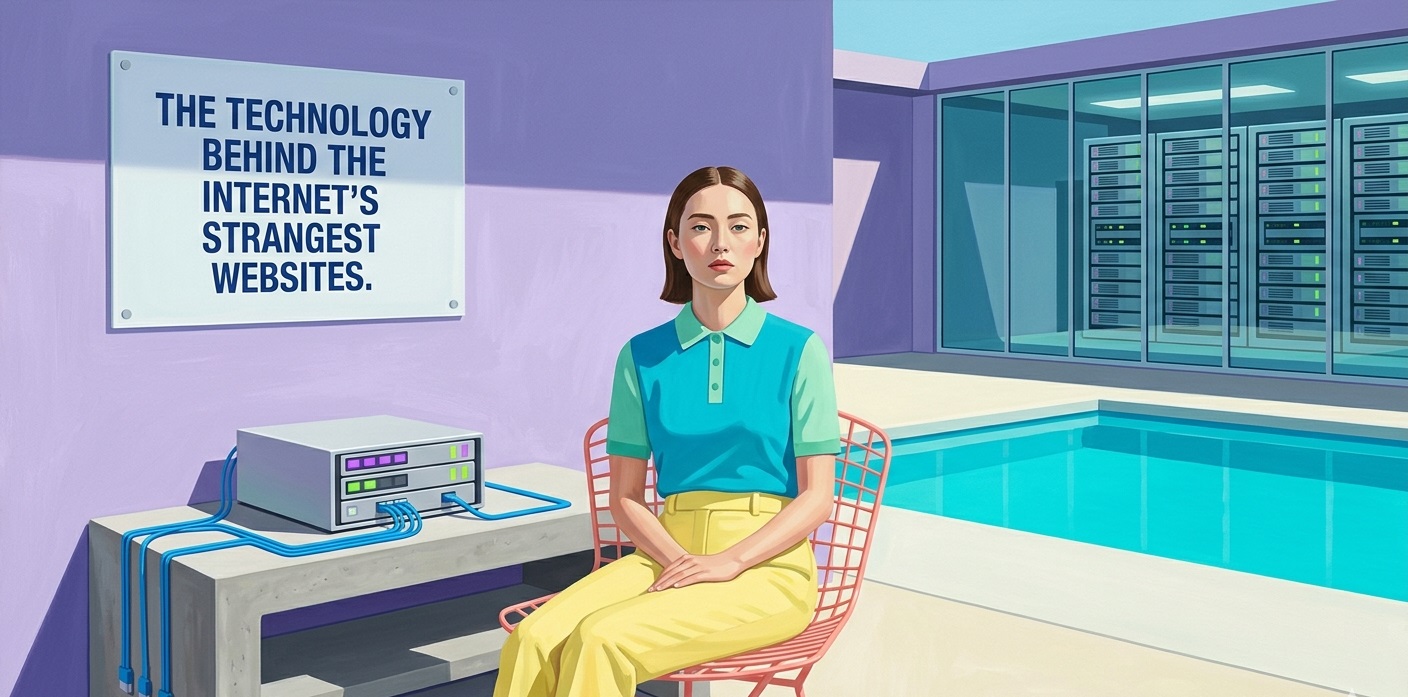
The internet is filled with polished platforms, productivity tools, and corporate ecosystems—but beneath that structured surface lies a bizarre, chaotic layer of creativity. From endlessly looping animations to surreal interactive experiences, some websites exist purely to confuse, amuse, or experiment.
What makes these strange websites fascinating isn’t just their randomness—it’s the technology behind them. Many are powered by cutting-edge tools like JavaScript, creative frameworks, and even artificial intelligence systems like TensorFlow.
In this article, we’ll explore the technology behind the internet’s strangest websites, uncovering how developers combine code, design, and experimentation to create digital oddities.
What Defines a “Strange” Website?
Before diving into the technical side, it’s important to understand what makes a website “strange.”
These websites often include:
- Surreal or absurd visuals
- Non-linear navigation
- Random or unpredictable behavior
- Minimal or no practical purpose
- Experimental user interaction
Examples of such platforms are often shared through communities like Reddit or curated lists across the web.
But behind every strange website is a surprisingly intentional technical design.
Technologies Powering Strange Websites
1. JavaScript: The Engine of Weirdness
At the heart of most strange websites is JavaScript.
JavaScript enables:
- Dynamic animations
- Randomized events
- Interactive elements
- Real-time updates
Developers often use JavaScript to:
- Generate random colors, shapes, or text
- Create infinite loops or recursive animations
- React to user input in unexpected ways
Libraries like Three.js allow developers to build surreal 3D environments directly in the browser.
2. HTML & CSS: Controlled Chaos
While HTML provides structure, CSS is where visual strangeness often emerges.
Advanced CSS techniques include:
- Keyframe animations
- Transformations (rotate, skew, scale)
- Glitch effects
- Layering and z-index manipulation
Strange websites often deliberately “break” traditional design rules:
- Overlapping elements
- Clashing colors
- Disorienting layouts
This creates a sense of unpredictability while still being technically controlled.
3. Randomization Algorithms
A defining feature of many strange websites is unpredictability.
Developers use:
- Pseudo-random number generators
- Seed-based randomness
- Procedural generation
For example:
- A page that shows a different animation every time you reload
- A site that generates unique abstract art per visitor
These systems rely on mathematical functions embedded in JavaScript or backend logic.
Experimental Design with WebGL and 3D Rendering
One of the most powerful tools behind visually bizarre websites is WebGL.
What WebGL Enables
- Real-time 3D rendering in the browser
- Complex particle systems
- Physics simulations
- Interactive environments
Combined with libraries like Three.js, developers can create:
- Infinite tunnels
- Floating geometric worlds
- Reactive audio-visual experiences
These technologies blur the line between websites and video games.
The Role of Artificial Intelligence
Strange websites are increasingly powered by AI.
AI Applications in Weird Websites
Using tools like OpenAI GPT models and TensorFlow, developers can create:
- Random story generators
- AI-generated art
- Chatbots with absurd personalities
- Deepfake-style visuals
AI introduces true unpredictability, making each visit unique.
Backend Technologies: Hidden Complexity
While many strange websites appear simple, some rely on powerful backend systems.
Common Backend Tools
- Node.js
- Python
- Firebase
These technologies handle:
- Data storage
- Real-time synchronization
- API integrations
- User-generated randomness
For example, a strange website might:
- Pull random images from APIs
- Store user interactions
- Generate evolving content over time
Glitch Art and Intentional “Broken” Code
One of the defining aesthetics of strange websites is glitch.
What Is Glitch Art?
Glitch art involves intentionally breaking digital systems to create visual distortion.
Developers achieve this by:
- Manipulating DOM elements
- Injecting errors into rendering
- Overloading CSS animations
- Using corrupted media files
Glitch-inspired design is often influenced by digital art movements and tools like Processing.
Infinite Loops and Recursive Design
Strange websites often feel endless.
How This Works Technically
Developers use:
- Recursive functions
- Infinite scroll systems
- Looping animations
JavaScript example concepts:
setInterval()loops- Recursive rendering
- Canvas redraw cycles
These techniques create experiences where:
- Content never ends
- Navigation has no clear exit
- Users feel “trapped” in the site
Sound Design and Audio APIs
Many strange websites use sound to enhance the surreal experience.
Web Audio API
Using Web Audio API, developers can:
- Generate procedural sound
- React to user input
- Create interactive music
Examples include:
- Websites that play random tones when you click
- Pages that generate ambient noise based on cursor movement
Audio adds a sensory layer of unpredictability.
User Interaction as a Core Mechanic
Unlike traditional websites, strange websites often revolve around interaction.
Interaction Techniques
- Cursor tracking
- Click-triggered events
- Keyboard input
- Device sensors
Developers may use:
- Event listeners in JavaScript
- Motion detection APIs
- Touch interactions on mobile
The result is a website that feels alive—and sometimes chaotic.
Minimalism vs. Overload
Strange websites often fall into two extremes:
1. Minimalist Weirdness
- Single button
- One strange function
- Simple but absurd concept
2. Sensory Overload
- Flashing visuals
- Loud audio
- Rapid animations
Both styles rely on the same core technologies but differ in execution.

Influence of Creative Coding Communities
Many strange websites are inspired by creative coding communities.
Platforms like CodePen and GitHub allow developers to:
- Share experimental ideas
- Remix strange concepts
- Collaborate on interactive art
These communities push the boundaries of what a “website” can be.
Performance Challenges
Strange websites often push browsers to their limits.
Common Issues
- High CPU usage
- Memory leaks
- Slow rendering
Developers must balance:
- Creativity
- Performance
- Compatibility
Tools like browser developer consoles and performance profilers help optimize these experiences.
Security and Sandbox Environments
Because strange websites often execute unusual scripts, security is important.
Key Considerations
- Avoid malicious scripts
- Use sandboxed environments
- Limit external API risks
Modern browsers enforce strict rules to ensure:
- User safety
- Data protection
Even the weirdest websites must follow these standards.
The Psychology Behind Strange Websites
Why do people enjoy them?
Key Factors
- Curiosity
- Surprise
- Humor
- Novelty
Strange websites break expectations, which activates deeper engagement.
They’re not just technical experiments—they’re psychological experiences.
The Future of Strange Websites
As technology evolves, strange websites will become even more advanced.
Emerging Trends
- AI-generated worlds
- VR-based web experiences
- Real-time multiplayer randomness
- Integration with WebXR
The line between:
- Website
- Game
- Art installation
…will continue to blur.
Conclusion
The internet’s strangest websites may seem chaotic or pointless at first glance, but beneath the surface lies a sophisticated blend of technology and creativity.
From JavaScript and WebGL to AI tools like OpenAI GPT models, these platforms showcase what’s possible when developers step outside conventional design.
Ultimately, these strange websites serve an important purpose:
They remind us that the web isn’t just for productivity or business—it’s also a space for experimentation, art, and pure, unapologetic weirdness. Learn now how to Create Your Own Useless Website – A Developer’s Guide