The internet was originally built for information sharing and communication, but it quickly developed a strange and delightful side: websites that serve no real purpose except entertainment, curiosity, or pure absurdity.
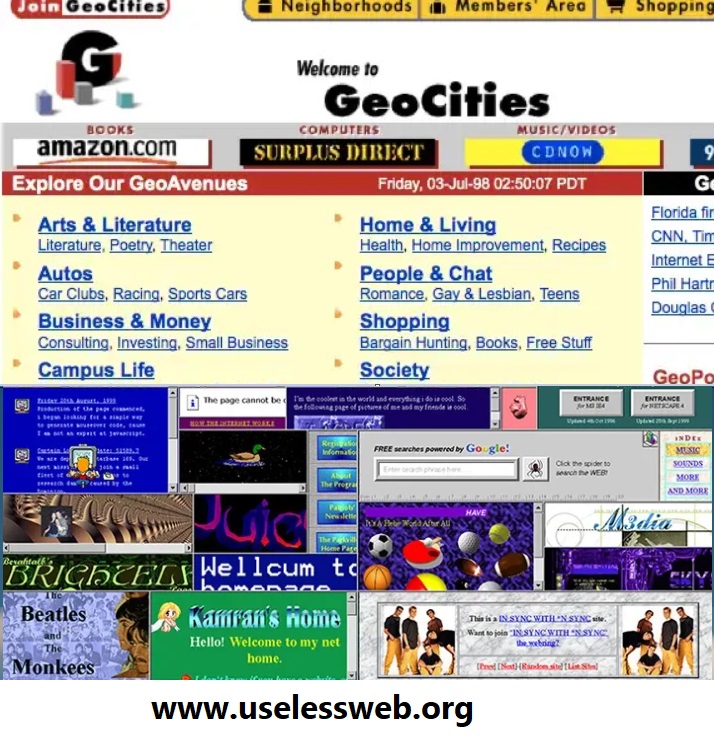
From blinking GIFs on GeoCities pages to modern click-and-laugh websites like The Useless Web, the useless internet has always been part of online culture.
These websites don’t solve problems or improve productivity. Instead, they celebrate randomness, humor, and creative experimentation.
In this article, we explore the history of the useless internet, from the early web of the 1990s to today’s bizarre digital playground.
The Early Internet and the Birth of Weird Websites (1990s)
When the internet became publicly accessible in the early 1990s, it was still an experimental space.
Platforms like:
- GeoCities
- Angelfire
- Tripod
allowed anyone to create a personal website.
Characteristics of early useless sites
- Animated GIF backgrounds
- MIDI music autoplay
- Random text pages
- Joke counters
- Guestbooks
Many pages existed purely for fun rather than utility.
These early experiments laid the groundwork for what we now call the useless internet.
Flash Animation and the Rise of Absurd Web Entertainment (2000–2010)
The early 2000s introduced interactive content powered by:
- Adobe Flash
Flash enabled creators to produce animations, games, and weird interactive experiences.
Popular websites included:
- Albino Blacksheep
- Newgrounds
These platforms hosted countless strange animations and mini-games that didn’t aim to be productive.
The internet was evolving into a digital playground of absurd creativity.
The Golden Age of Useless Websites
Around the 2010s, the idea of deliberately useless websites became a cultural trend.
Some iconic examples include:
- The Useless Web
- Pointer Pointer
- Cat Bounce
These sites had simple concepts but delivered unexpected entertainment.
Examples:
Pointer Pointer
Displays a photo where a person’s finger points exactly at your cursor.
Cat Bounce
Endless bouncing cartoon cats that react to mouse movement.
These sites demonstrate that uselessness can be a form of digital art.
Why People Love the Useless Internet
Despite having no practical function, useless websites attract millions of visitors.
Several factors explain their popularity:
1. Curiosity
Humans naturally explore strange and unexpected content.
2. Humor
Many useless websites are essentially interactive jokes.
3. Nostalgia
Older users remember the chaotic creativity of the early internet.
4. Creative Freedom
Developers can experiment without commercial pressure.
Platforms like GitHub have helped creators easily share small web experiments.
Modern Absurdity in the Internet Era
Today’s useless internet continues evolving.
Developers use modern tools like:
- JavaScript
- HTML5
- CSS
These technologies allow more creative and interactive nonsense websites.
Examples include:
- Infinite scrolling jokes
- Random generators
- Meme simulators
- Pointless click games
Even viral sites like Endless Horse gained popularity for their bizarre concept.
The Cultural Impact of Useless Websites
While they may seem pointless, useless websites play an important cultural role.
They demonstrate:
- internet creativity
- playful experimentation
- digital humor
They also influenced modern meme culture on platforms like:
- TikTok
These communities continue sharing absurd and experimental online content.
Are Useless Websites Actually Useful
Ironically, useless websites serve several hidden purposes.
Creative practice
Developers often build them to test coding skills.
Stress relief
Short bursts of humor help people relax online.
Digital art
Some sites blur the line between technology and art.
In many ways, the useless internet reflects the playful side of human creativity.
Conclusion
The useless internet has existed since the earliest days of the web.
From the chaotic personal pages of GeoCities to modern random website generators like The Useless Web, these strange creations remind us that the internet isn’t only about productivity or information.
Sometimes, the internet is simply about having fun.
Absurd websites, pointless experiments, and strange interactive jokes are part of what makes the web feel human and unpredictable.
As technology evolves, the useless internet will likely continue growing — proving that even in a world obsessed with efficiency, there will always be room for a little nonsense online.